What makes a neighborhood go from industrial to irreplaceable? In Tribeca, the answer is not just wealth or trend. It is a rare mix of history, regulation, architecture, and sustained demand that turned old warehouse blocks into one of Manhattan’s most established residential markets. If you are trying to understand why Tribeca holds value so well, this guide breaks down the forces behind its blue-chip status. Let’s dive in.
Tribeca’s Story Starts With Reuse
Tribeca did not become a prized residential neighborhood by wiping the slate clean. According to New York City planning documents, the area began with residential roots in the 1700s, evolved into a commercial center in the 1800s, and later functioned as part of Washington Market, a major food and warehouse district tied to the Hudson River waterfront.
By the 1960s and 1970s, industrial activity had receded, and artists began moving into loft buildings. Over time, the neighborhood shifted toward residential use. Even the name TriBeCa, short for Triangle Below Canal, reflects a place with a distinct identity tied to geography and history.
That transition matters because Tribeca’s value is deeply linked to adaptive reuse. Instead of replacing its old building stock, the neighborhood elevated it. The result is a residential market built on character, scale, and architectural continuity rather than generic new development.
Why the Built Environment Matters
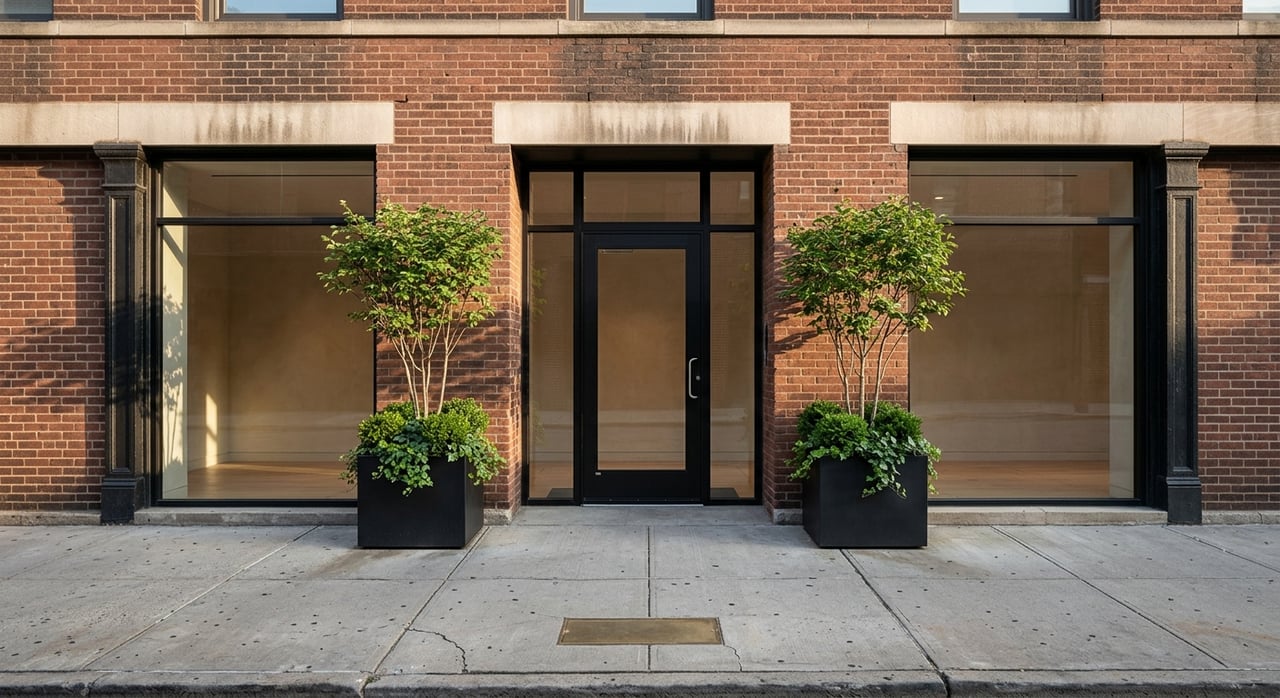
In Tribeca, the buildings are a major part of the market story. Preservation sources describe the neighborhood as home to some of New York City’s earliest cast-iron buildings, along with a strong concentration of 19th-century warehouses and loft structures.
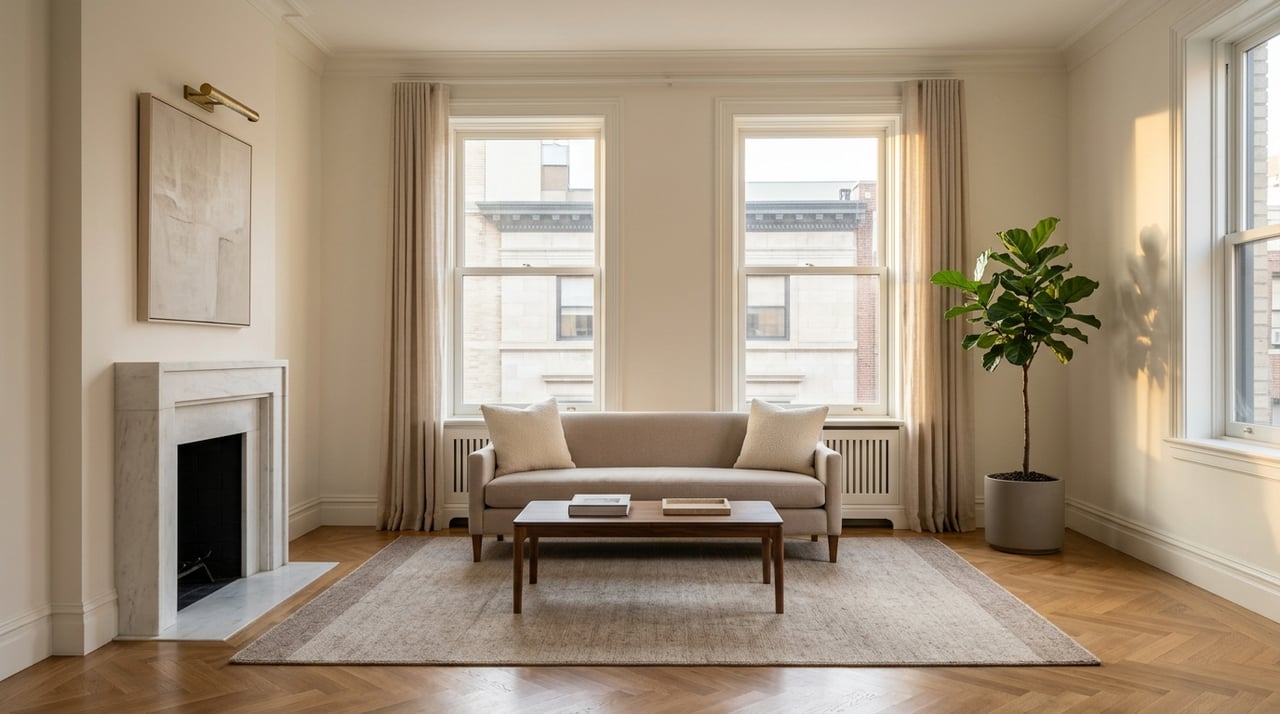
That gives the area a physical identity that is hard to reproduce elsewhere in Manhattan. Large windows, tall ceilings, broad floor plates, and industrial-era proportions still shape how many homes live today. For buyers, those qualities are not just aesthetic. They often influence long-term desirability and pricing.
North Tribeca planning documents also describe a waterfront edge neighborhood bounded by the Hudson River, West Street, Broadway, and Canal Street. With Hudson River Park just west of West Street and a built form dominated by late-19th- and early-20th-century loft buildings, the area feels intentional and consistent rather than pieced together.
Preservation Helped Create Scarcity
Scarcity is one of the clearest reasons Tribeca became a blue-chip residential market. The neighborhood is protected by four historic districts, West, East, North, and South, designated in 1991 and 1992, with a South Extension added in 2002.
Historic district status matters because it helps preserve the architectural fabric that buyers value. It also limits how easily the neighborhood can be remade at scale. In practical terms, that has helped keep Tribeca from losing the qualities that made it desirable in the first place.
The zoning framework reinforces that pattern. Tribeca is governed by the Special Tribeca Mixed Use District, which was designed to protect stable industries, allow controlled residential use where compatible, ensure safe and sanitary housing in converted buildings, and guide land use and development.
Together, landmark protection and special zoning have constrained large-scale replacement development. That is a key reason Tribeca feels curated. It is also a major reason inventory can remain limited relative to demand.
Why Tribeca Commands Premium Pricing
Tribeca’s pricing is not based on prestige alone. It reflects a market where architecture, location, and supply constraints intersect.
StreetEasy describes Tribeca as the most expensive neighborhood in New York City and notes that renovated warehouses converted into large, light-filled lofts can command some of the highest prices per square foot in the city. It also points to the neighborhood’s proximity to the Financial District and its draw as a destination for restaurants, shopping, and design galleries.
Recent market snapshots place Tribeca firmly in a high-price band, even if the exact figure varies by source. Zillow’s home value index put the average Tribeca home value at $3,714,466 as of March 31, 2026. Redfin reported a March 2026 median sale price of $3.675 million, while Realtor.com showed a median list price of $4.50 million.
The broader point is not which number is best. It is that Tribeca consistently operates at the top end of the Manhattan market. When a neighborhood holds that position across multiple data sources, it usually signals durable demand rather than a short-lived cycle.
Blue-Chip Means More Than Expensive
A blue-chip market is not simply a costly one. It is a market where buyers tend to value durability, rarity, and product quality over short-term novelty.
Tribeca fits that definition well. The neighborhood combines historic architecture, constrained redevelopment, waterfront adjacency, and a well-established residential identity. Those factors support a market where the best properties often stand apart not just by address, but by specific building and layout qualities.
In other words, Tribeca behaves like a scarcity market. Two homes on nearby blocks can trade very differently based on light, volume, windows, finishes, and the condition of the building itself. That level of selectivity is typical of mature, high-value markets.
What Buyers Usually Find in Tribeca
Tribeca’s housing stock is shaped by its loft and warehouse history. Buyers most often encounter co-ops and condos, and understanding the difference matters.
New York City housing guidance explains that co-op owners purchase shares in a cooperative corporation that owns the real property. Condominium ownership, by contrast, gives you title to the individual unit plus an interest in the common elements.
That distinction can affect everything from ownership structure to the review process. In a neighborhood where many buildings have long histories and distinctive configurations, it is especially important to understand both the apartment and the building behind it.
What Separates the Best Buildings
Not every Tribeca property earns the same premium. In this market, the strongest pricing usually goes to buildings that combine preserved loft character with practical performance.
That often means features such as generous ceiling height, strong natural light, large windows, and layouts that make the most of the original warehouse scale. Buyers also tend to respond to buildings where key systems have been maintained rather than deferred.
The New York State Attorney General recommends reviewing the full offering plan and looking closely at the physical condition of the property. Important areas include the facade, roof, flooring, elevators, HVAC, windows, electrical wiring, and plumbing.
That guidance is especially relevant in Tribeca, where older buildings can offer extraordinary space but may also require careful diligence. Board minutes and financial reports can reveal issues before they become obvious in pricing. For a buyer, that is where disciplined analysis matters.
Why Tribeca Still Feels Defensible
One reason blue-chip markets hold up is that their appeal is difficult to copy. Tribeca has that advantage.
Its architecture is rooted in a specific period. Its zoning and landmark protections limit sweeping change. Its housing stock includes homes with proportions and materials that are hard to recreate convincingly. And its location places it close to Lower Manhattan while maintaining a distinct neighborhood feel.
That combination gives Tribeca a defensible position in Manhattan’s residential landscape. For buyers, it can support confidence in long-term desirability. For owners, it helps explain why thoughtfully positioned properties often attract serious attention.
What This Means If You’re Buying or Selling
If you are buying in Tribeca, it helps to look beyond the headline address. The real value often sits at the building and unit level, where light, layout, window line, ceiling height, and infrastructure quality can have an outsized impact.
If you are selling, the same logic applies in reverse. In a market this design-aware and scarcity-driven, presentation and positioning should highlight what is truly rare about the apartment and the building. Generic marketing tends to flatten value, while precise marketing can clarify it.
That is one reason Tribeca rewards a strategic approach. It is not a neighborhood where every square foot is interchangeable. Buyers are often paying for a specific kind of volume, atmosphere, and architectural integrity, and the strongest results usually come from understanding exactly where that premium lives.
For a neighborhood built on reinvention, Tribeca now reads as remarkably established. Its rise to blue-chip status came from preserving what made it different, limiting what could replace it, and attracting buyers who continue to value rarity, scale, and quality. If you are evaluating a purchase or thinking about how to position a Tribeca property for sale, that long view matters. To discuss Tribeca through the lens of product quality, pricing, and long-term positioning, connect with Shelley Kaminer.
FAQs
Why is Tribeca considered a blue-chip residential market?
- Tribeca combines historic architecture, constrained redevelopment, waterfront adjacency, and sustained high-end demand, which supports long-term desirability and elevated pricing.
Why are Tribeca apartments so expensive?
- Tribeca pricing is supported by limited supply, landmarked building stock, special zoning, and strong demand for large loft-style homes with light, volume, and architectural character.
What kinds of homes are common in Tribeca?
- Buyers in Tribeca commonly encounter loft conversions, co-ops, and condos, many within former warehouse and cast-iron buildings.
What is the difference between a Tribeca co-op and condo?
- In a co-op, you buy shares in a corporation that owns the building, while in a condo, you take title to the unit itself plus an interest in the common areas.
What should buyers review in an older Tribeca loft building?
- Buyers should closely evaluate the facade, roof, elevators, HVAC, windows, electrical wiring, plumbing, and other building systems, along with financial reports and board minutes when available.
What makes one Tribeca building more valuable than another?
- Premium buildings in Tribeca often stand out for preserved loft scale, better natural light, large windows, strong layouts, and well-maintained building infrastructure.